
A Short history of Pipers Shooting Club and Babdown Range
Pipers Shooting Club and the Babdown range have been intertwined almost since the beginning. Babdown is situated on an ex-WW2 RAF airfield. RAF Babdown Farm came into being in 1940. It was planned as a Relief Landing Ground for Number 9 Flying Training School based at Hullavington. By 1942, the airfield was redeveloped and was used by Number 3 Flying Instructors School and also by Spitfires from Number 52 Operational Training Unit. Other units came and went throughout the war (see here) until the airfield was closed in 1948. Some buildings were demolished over the years, but three hangers exist to this day along with the rifle range. There is much information about this period here. The range was originally designed for small arms training by RAF personnel and is a common (at the time) variation on the MOD 1908 Barrack Range. This is borne out by the ground sloping down to the butts - the ricochet pit. Club memories suggest that automatic weapons were in use on the range and that aircraft guns may also have been tested on the range. However, the recent NRA range inspectors suggest that this is unlikely.
As an aside, the double hedge that runs down the side of the range is mediaeval in its origin and was either a drover’s route or a salt track.
The range was used in the 1960s for the Gloucester County pistol championships run by Gordon Jones – a mainstay of county smallbore shooting.
The North Wiltshire and South Gloucester Club used Babdown in the early 70s. Dave Heath recalls that it was a very small club when he joined, with the Wiltshire element having stopped using it. They ceased to operate as a club around 1973 and Dave went to see the landowner, a Mrs Yvonne Randall, and obtained her permission to continue using the range. Further talks with Mrs Randall allowed British Rail Pistol Club to use it for full bore pistol shooting. The rent was agreed at £1 per month. Around 1975, British Rail Pistol Club folded with the closure of BR Swindon works and the closing down of their Sports and Social facilities - which included a 100 yd range.
A new club was formed, and our indoor range was based at Shrivenham just north of Swindon. The secretary was Nicks Spurdens, who was also secretary of Burmah Castrol club. Nick recalls that their small club was fading and so they amalgamated and eventually adopted the name Pipers Rifle and Pistol Club in 1991. This was due to the location near Piper's roundabout in Swindon. In the early 1980s, the Babdown range became the club base and the facilities at Shrivenham were largely given up – although they continued to be used occasionally until the mid 1990s.
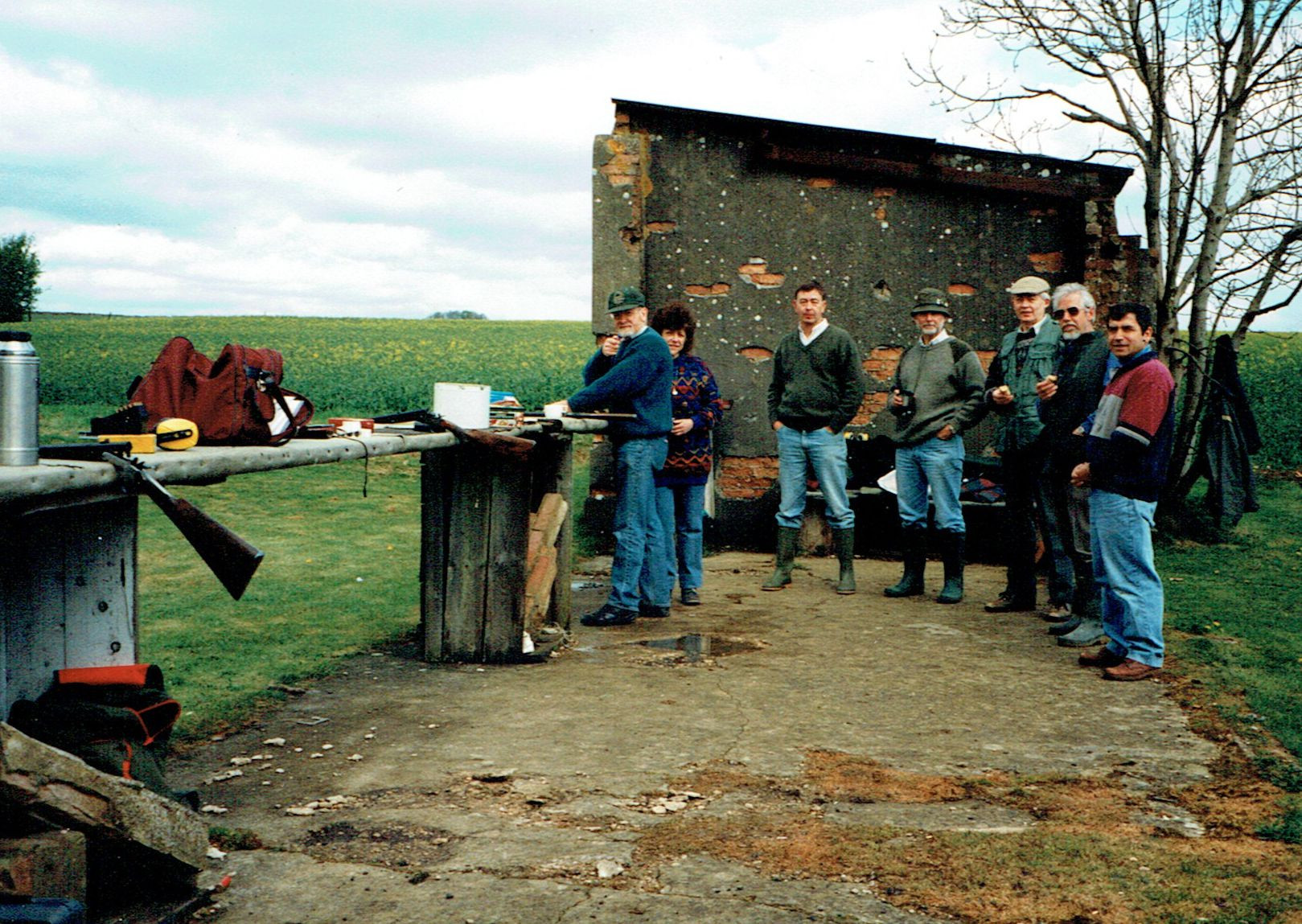 Dave Heath writes “From the outset it was decided the club would be based on competitive shooting not just plinking. To that end I decided to run a number of internal club competitions through the summer months. These covered the majority of guns that were in use in the club at that time. They encouraged full bore pistol, gallery rifle and muzzle loading guns. Shotguns were discouraged at the landowners request due to poaching problems at the time. I introduced an element of chance into competitions to encourage less determined members a chance of success thus evening up the field for prizes. Pistol competitions included Skittles and post cutting shoots which consumed copious amounts of ammunition. Rook rifle shoots were shot at 50 and 25 yards at silhouette wooden targets placed in the bank at different locations. Slowly things developed into a more formal structure. We also had use of a turning target system powered by compressed air. We competed in a Schüetzen match at 50 yards based on a German / Swiss competition. It's traditionally shot on a painted wooden target with a small offset bull. Each competitor has as many sighters as need on a separate target but only one on the match target. The winner being nearest the bull. The winner keeps the target as a prize with other shooters signing it. In Germany these targets are highly prized.”
A number of visits were arranged through members and the Royal Military College of Science was popular with the chance to look around and handle the extensive collection of military small arms. This would finish with a visit to the range and a chance to shoot some exotic military hardware. Another popular visit was the Warminster collection.
 Some years later, Mrs Randall sold the land and ranges on to Mr Greville Vernon and didn't inform the club. A very swift meeting was arranged with the new landowner who willingly granted us permission to carry on shooting at Babdown. He later constructed the track to the range for farm use which gave us an all-year-round range facility.
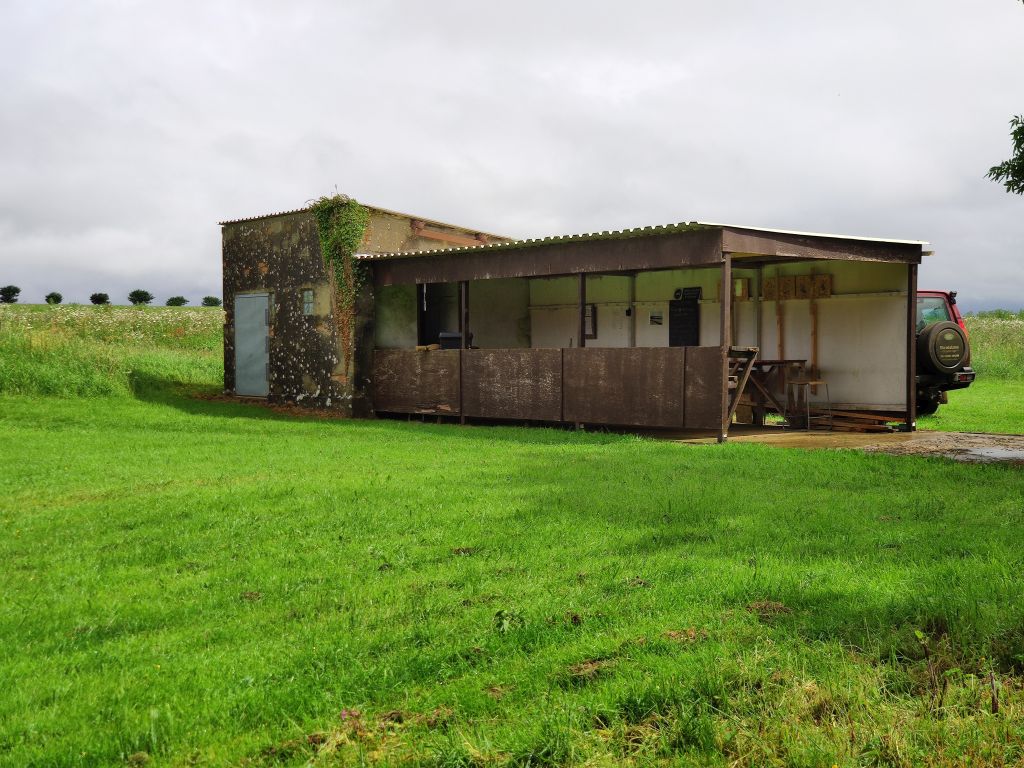
During 1996, the covered firing point was built. This was done by Paul Beach and Nick Spurdens with other members labouring. Many of the materials had to be carried from the barn as it was before the track was built.
In the early days of competition, it was Dave Heath’s wife, Marj, that decided refreshments would bring an air of friendship to the proceedings. She became social secretary, providing quiche, cake and coffee for all the competitions. She also provided picnics at Bisley outings. During the Black Powder Day in June, Marj and Clive Webber also ran a BBQ. It was also Marj that instigated trophies for winners and illuminated certificates for competitors down to 3rd place. In the beginning, she arranged semi-formal dinner and prize giving evenings. These later morphed into skittles evenings with prize giving and buffet as it gave a more social evening with wives and friends included.
In the 1990s and early 2000s, groups of as many as ten would shoot at Bisley in the historic weekend of the Imperial Meeting in July and again at the Trafalgar weekend in October. These venues attracted overseas visitors which gave the proceedings an international flavour. As Dave Heath writes, “We became known as ‘The Swindon Mob’ with a reputation to be reckoned with. Over the years the prize tally was respectable, and many long-term friendships were formed. There are still a few stalwarts who go as guests of HBSA for their annual Rook and rabbit competitions”.
In the late 1990s, the club name was changed from Pipers rifle and Pistol Club to Pipers Shooting Club. No one now seems certain why but Roy Brocklehurst writes “… it might have been when pistols were banned and "Pipers Shooting Club " was felt to be more politically correct”.
For a few years in the mid-2000s the club used the 100-yard range at Stoke Orchard. This gave members a chance to use full bore rifle without having to travel too far.
In the early 2000s, the club had around 35 members and the range was only open on Wednesday and Sunday mornings.
In 2010, there was a request from Tetbury Rifle Club - who had used Babdown many years previously - to return to using the the range.
This was agreed and initially, we used Babdown on Wednesday, Friday and Sunday while Tetbury had it on Tuesday, Thursday and Saturday. As our friendly partnership developed, we moved to anyone shooting any time, so the range became available seven days a week to all.
The Covid pandemic of 2020 necessitated the imposition of an online booking system and this worked so well that both clubs have kept this going ever since.
In 2018 it was realised that our military range safety certificate, issued in the 1960s, was – while legitimate – very outdated and not now the way to continue to meet then current club legislation which was clear that all responsibility for safety lay with the club management. The club contacted the National Rifle Association (NRA) for advice and a range visit was arranged from their Regional Ranges Manager and their range safety consultant. As a result, the club took documented responsibility for range safety through a risk assessment approach developed with help from the NRA.
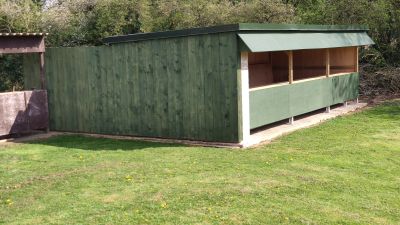 One result of this risk assessment was that it was no longer considered viable to place targets in front of the mantlet at a distance of 20 yards from the firing point. So, in 2020, it was decided to build a new 20-yard firing point to the left of the existing one giving us six firing points at each of 20 yds and 25m. The new firing point also provided provision for one lane of prone shooting. This was built almost entirely by John Ward (who also designed it), Phil Moss and Mike Johnson. As a follow on to this, various repairs to the existing firing point are planned.
Gong targets were also introduced around this time.
Despite our long usage of Babdown, we had no formal agreements with the landowner. In 2020, The current Secretary, Steve Goodwin, met with James Vernon, the landowner and both agreed that a written agreement would be beneficial. As a result, a new agreement was drawn up and agreed and signed by both parties.
Since the early 2000s, the club has competed in the Midland League with rifle and pistol. They have often acquitted themselves well, despite some members using rifles over 100 years old against clubs using more modern guns. By 2022, with membership up to 50, the club was entering six teams (of three) in the Gallery Rifle league, two teams in the muzzle loading pistol league and two teams in the Long Barrelled Revolver/Pistol league.
In 2022, at the suggestion of Dave Heath, the club planted three Beech trees to celebrate the Platinum Jubilee of Queen Elizabeth II.
Internal competitions have changed over the years. For a long while, they focussed heavily on muzzle loading pistol and rifle and rook rifles. However, disciplines change and multiply as so do the types of guns used by members. Competitions have changed with the loss of rook rifle and M/L rifle and the addition of Cowboy shooting, gallery shooting and long-barrelled revolver/pistol.
The club endeavours to move with the times. Legislation changes, disciplines change, and members’ interests change. As Dave Heath wrote, “As the club welcomes new and younger members with fresh ideas, we see a change in the dynamics of the club. So, it is time for us oldies to ‘ride off into the sunset’ and let you guide the success of pipers into the future”.
We all hope the club will continue for many years to come, supporting all legal and safe shooting disciplines that its members want.